Wednesday, 5 June 2013

Music Format Part 7

MP3 - 1995

MPEG-1 or MPEG-2 Audio Layer III, more commonly referred to as MP3, is a patented encoding format for digital audio which uses a form of lossy data compression. It is a common audio format for consumer audio steaming or storage, as well as a standard of digital audio compression for the transfer and playback of music on most digital audio players.

Mp3 Player
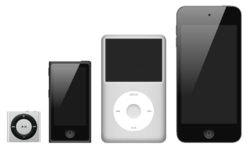


An MP3 player is a consumer electronics device that is capable of storing and playing digital media such as audio, images, video, documents, etc. The data is typically stored on a hard drive, microdrive, or flash memory. Often digital audio players are sold as MP3 players, even if they support other file formats. Other types of electronic devices like cellphones, internet tablets, and digital contenders are sometimes referred as PMPs because of their playback capabilities. 

Music Formats Part 6

Mini Disk - 1991


The MiniDisc (MD) is an obsolete magneto-optical disc-based data storage device for 74 minutes and, later, 80 minutes, of digitized audio or 1 gigabyte of Hi-MD data. The Sony brand audio players were on the market from September 1992 until March 2013. The digitally encoded audio signal on a MiniDisc has traditionally been data-compressed using the ATRAC format.

Music Formats Part 5

Digital Audio Tape - 1987


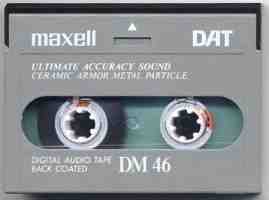
Digital Audio Tape is a signal recording and playback medium developed by Sony and introduced in 1987.In appearance it is similar to a Compact Casette, using 4 mm magnetic tape enclosed in a protective shell, but is roughly half the size at 73 mm × 54 mm × 10.5 mm. As the name suggests, the recording is digital rather than analog. DAT has the ability to record at higher, equal or lower sampling rates than a CD at 16 bits quantization. If a digital source is copied then the DAT will produce an exact clone, unlike other digital media such as Digital Compact Casette, which use a lossy data reduction system.

Music Formats Part 4

Compact Disk - 1982


The compact disc, or CD for short, is an optical disk used to store digital data. The format was originally developed to store and play back sound recordings only, but was later adapted for storage of data. Several other formats were further derived from these, including write-once audio and data storage, rewritable media and enhanced music CDs. Audio CDs and audio CD players have been commercially available since October 1982.


Music Formats Part 3

Casette Tape - 1963

The Compact Cassette, also commonly called cassette tapeaudio cassette, or simply tape, is a magnetic tape recording format for audio recording and playback. Compact cassettes come in two forms, either already containing content as a pre-recorded cassette, or as fully recordable "blank" cassette. It was designed originally for dictation machines, but improvements in fidelity led the Compact Cassette to supplant the stereo 8-track cartridge and reel-to-reel tape recording in most non-professional applications.


Between the early 1970s and the late 1990s, the cassette was one of the two most common formats for prerecorded music, first alongside the LP Record and later the CD.


Tuesday, 4 June 2013

Music Formats Part 2

Vinyl - 1948


Vinyl record, or colloquially, "a record", is an analog storage system consisting of a flat disc with an inscribed, modulated spiral groove. The groove usually starts near the periphery and ends near the center of the disc


The sound quality and durability of vinyl records is highly dependent on the quality of the vinyl. During the early 1970s, as a cost-cutting move towards use of lightweight, flexible vinyl pressings, much of the industry adopted a technique of reducing the thickness and quality of vinyl used in mass-market manufacturing. 


Music Formats Part 1

Gramophone - 1895 

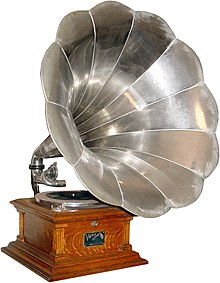
gramophone record, commonly known as a phonograph record is an analog sound storage medium consisting of a flat disc with an inscribed, modulated spiral groove. The groove usually starts near the periphery and ends near the center of the disc. Phonograph records are generally described by their diameter in inches, the rotational speed at which they are played, their time capacity, their reproductive accuracy, or "fidelity", and the number of channels of audio provided. 

Phonograph records were the primary medium used for music reproduction for most of the 20th century, replacing the phonograph cylinder, with which it had co-existed, by the 1920s.